Dispatch 003: The Sovereign Collapse: Anatomy of the 1979 Iranian Revolution
Tehran New Year's Eve 1977. President Jimmy Carter toasts Shah Mohammad Reza Pahlavi, calling Iran "an Island of stability in on of the more troubled areas of the world".
The reality? Just over a year later the shah-ruler of one of the most heavily armed, oil rich, and western backed nations on earth-fled his own country in a private jet, never to return.
True political authority cannot be manufactured or sustained by foreign backing alone. Ultimate sovereignty always rests with the local population, meaning a regime that fails to secure the legitimacy of its own people is fundamentally hollow. When that cultural foundation erodes, even the most heavily armed , externally supported power will eventually collapse.
The Price of Rapid Modernization
From the outside in the Shah's policies were good for Iran,and no one could argue that his policies modernized Iran and brought it into the 20th century. Through his sweeping "White Revolution", The shah attempted to forcefully transform a deeply religious society into a secular western powerhouse. He stripped feudal landlords of their property to redistribute it to peasants, extablished a literacy corps of soldiers to replace religious school houses and granted women the right to vote, but his forces modernization was a double edged sword.
Ultimately this forced modernization suffered from a fatal blind spot: It completely failed to account for local traditions, deep seeded cultural greivances, and the psychological impact of rapid change. To the ordinary citizen The Shah was increasingly viewed not as a visionary leader, but as a foreign puppet who was actively trying to dismantle Iran's heritage to make it into a western country. By forcing a deeply religious and traditional society to reshape itself into a western image, the regime began to look less like an independant superpower and more like a vassal state, setting the stage for an explosive backlash
1978 The Year: The Streets Took Over
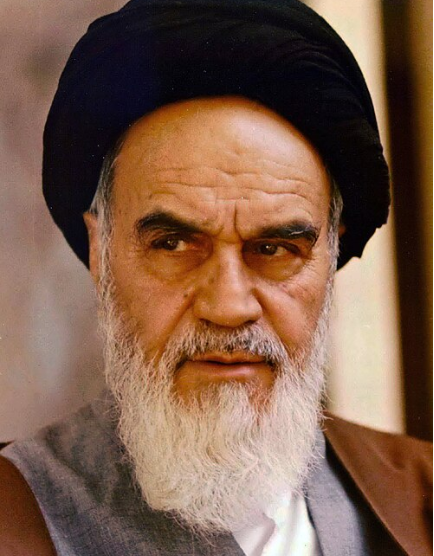
By 1978, Ayatollah Ruholla Khomeini a religius cleric exhiled in France had become the gravity well of Iranian dissent. As the Shah's brutal secret police, the SAVAK ruthlessly crushed all secular political opposition the local mosque became the only safe sanctuary left for citizens to organize. Khomeini masterfully latched onto the economic and cultural greivances of the population, his following balooning precisely because of the regime's heavy-handed tyranny. The powder keg finally exploded in January 1978, when the government sponsored a state sponsored anonymous newspaper article attacking Khomeini, defaming him as a fraud and a British agent. Designed to neutralize his influence the insult catastrophically backfired-sparking sparking furious mass student protests.
Throughout 1978, a relentless tragic rythm took over the country. Everytime Royalist forces killed protestors, Shia dictated a mass memorial 40 days later-gatherings that naturally morphed into fresh, angry demonstrations, leading to more clashes, more deaths, and a self perpetuating loop of rebellion. The absolute point of no return arrived on September 8, 1978 known as "Black Friday". Having just declared martial law the regime deployed tanks and helicopter gunships against thousands of peaceful demonstrators gathered in Tehran's Jaleh Square. The resulting massacre left hundreds dead in a single morning, shattering any remaining illusion of peacefule reform and convincing the population that the regime had to be completely overthrown.
To bypass the state's massive state apparatus and strict media censorship, the revolutionary movement turned to an unexpectedly potent weapon; the humble cassette tape. While exiled in France, Ayatollah Khomeini recorded his fiery anti-regime sermons onto these inexpensive easily concealable tapes, which were than smuggled across the border into Iran. Once inside they were rapidly copied by the thousands in makeshift basement backrooms. Spreading like a viral, decentralized network through the safety of local mosques, these recordings allowed Khomeini's voice to resonate directly in the ears or millions of ordinary Iranians. It was history's first open source, media driven rebellion-domocratizing dissent, completely outmaneuvering state control, and providing the ultimate psychological motivation that united masses to take the streets.
The Absolute Collapse
The breaking point arrived on January 16, 1979, when the Shah realizing his absolute rule had utterly vanished, fled the country into permanent exile under the guise of a "vacation". Just over two weeks later, on February 1st Ayatollah Khomeini made his triumphant return to Iran greeted by a staggering ecstatic crowd of millions filling the streets of Tehran. With the head of the state gone, the ultimate crisis shifted to the armed forces who were forced to make a definitive choice turn their guns on their own countrymen to save a failed hollow regime, or step aside and yield to the will of the people. They chose the people, declaring neutrality and causing the last pillars of the monarchy to instantly collapse. Utilizing his immense popularity and the vast network of mosques Khomeini consolidated absolute power transforming the Imperial State of Iran to the Islamic Republic of Iran
The Macro Take Away
The resulting 1979 energy crisis perfectly illustrates the volatile economic shockwaves that radiate from Middle Eastern turmoil. Yet the true terror of that crisis lay in it's psychology; it wasn't a catastrophic physical shortage, but a wave of panic buying and hoarding that brought western economies to its knees. If a mere psychological could trigger global chaos, it serves as a stark warning of what a genuine structural shortage could look like during true regional warfare. Ultimately the revolution delivers a timeless geopolitical lesson; a government cannot be artificially imposed from the outside. Without the organic backing of its own people a regime is merely a hollow institution. No matter how well-intentioned its modenization policies may seem on paper, a population that feels culturally erased will always see the state as an occupying force -and they will eventually rise to tear it down.

Member discussion